Suthra Punjab Overview
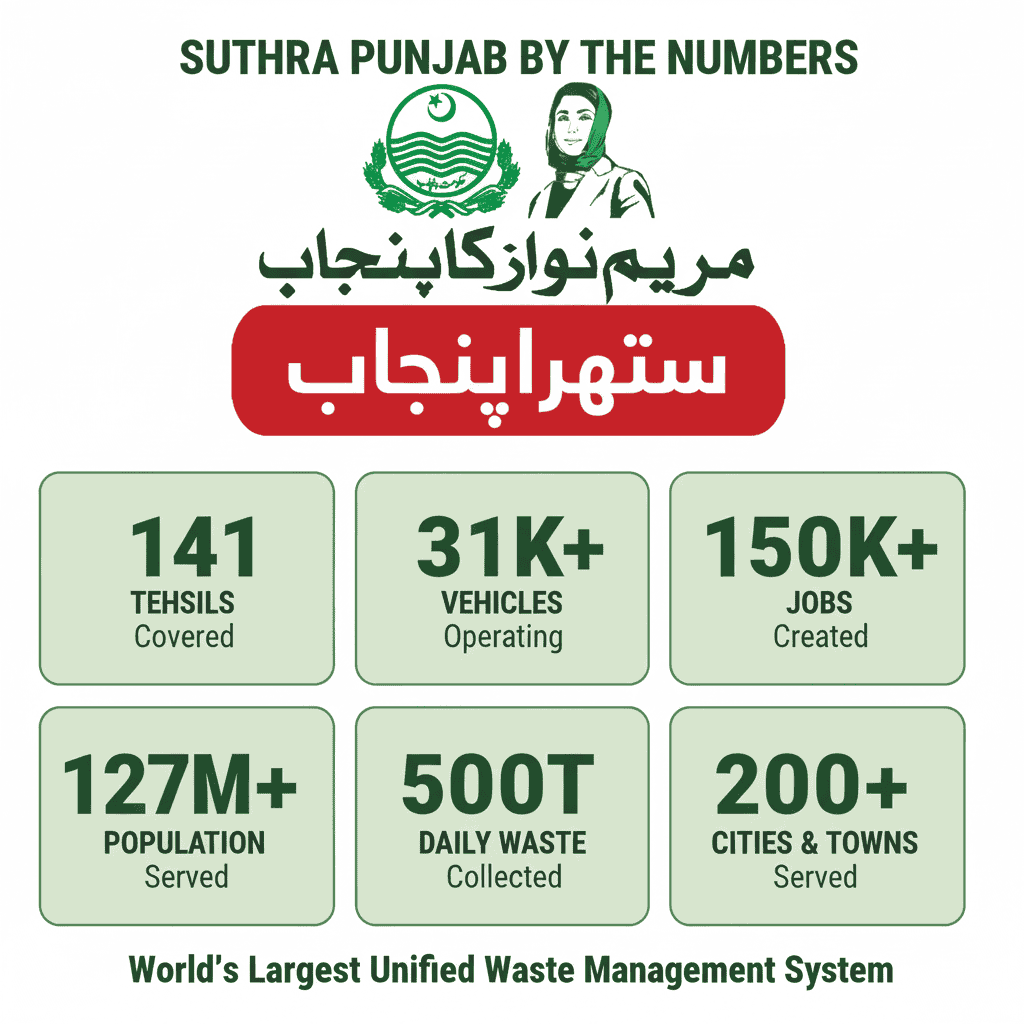
The world's largest unified waste management system, serving 130 million people with technology, transparency, and trust.
A Vision Turned Reality
Punjab, the land of five rivers, was once choking under its own waste. For decades, garbage piled up in streets, drains, and open fields, causing severe health issues and environmental damage. Today, that narrative has changed completely. Enter Suthra Punjab, a visionary initiative launched by Chief Minister Maryam Nawaz Sharif to transform the province into a global model of cleanliness.
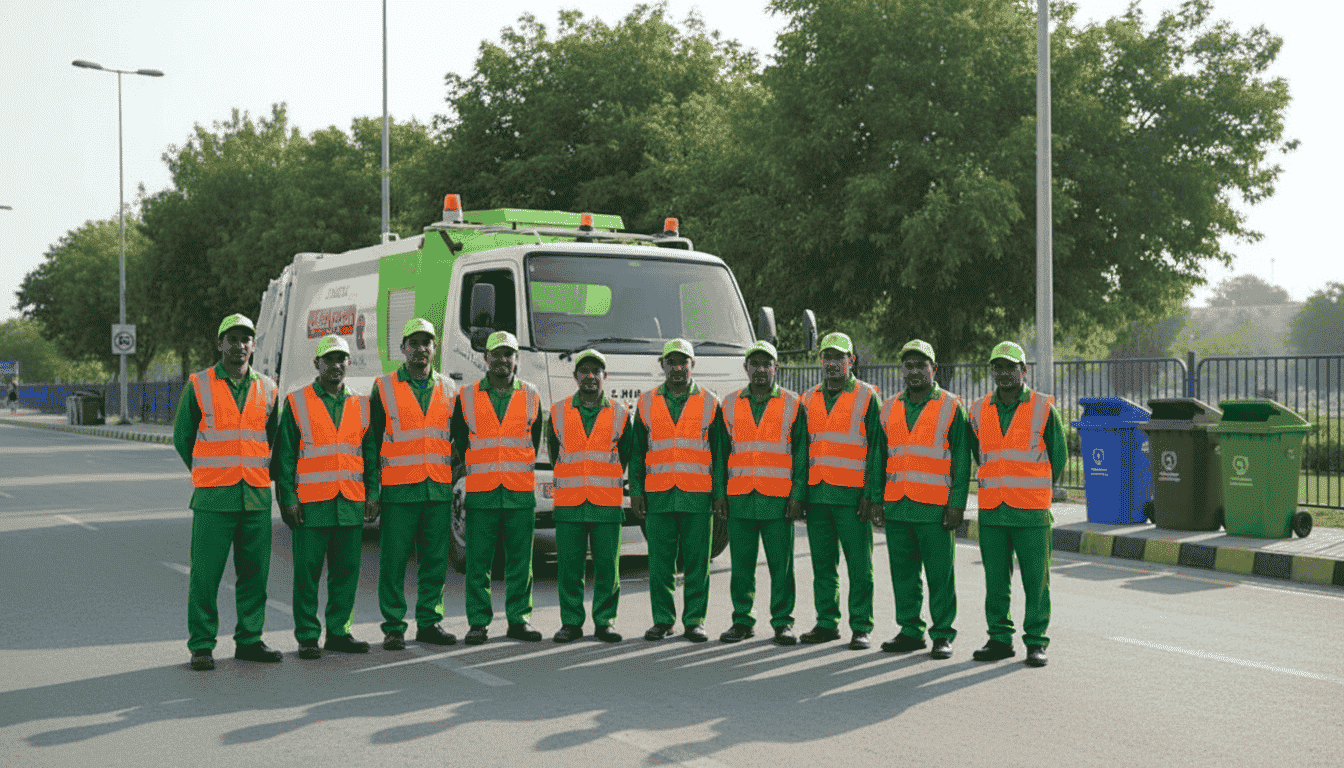
This isn't just a cleaning campaign; it is a massive infrastructure project. Before this program, less than 10% of the daily 50,000 tons of waste was collected. Now, a fleet of over 30,000 vehicles and a workforce of 150,000 dedicated employees ensure that garbage is collected, transported, and disposed of scientifically every single day.
Powered by Technology
What makes Suthra Punjab unique is its reliance on advanced technology. Every truck is GPS-tracked, every worker's attendance is marked via facial recognition, and a centralized AI-driven Control Room monitors operations in real-time. This digital backbone ensures accountability, efficiency, and transparency like never before.
The digital transformation didn't happen overnight. Engineers and planners spent months installing sensors on thousands of vehicles, training workers on new attendance systems, and building a dedicated fiber-optic network to connect every tehsil's control room with the central hub in Lahore. Today, officials can spot a missed pickup within minutes and dispatch the nearest available crew.
What This Means for Citizens
When a family in a small village near Multan wakes up to find their street hasn't been swept, they no longer need to travel to a government office or wait for a weekly visit from a supervisor. A single message on WhatsApp with a photo pinpoints the exact location, and the control room routes the complaint to the contractor responsible for that zone.
In cities like Lahore and Faisalabad, residents have started receiving notifications about collection times a day in advance. Elderly citizens who previously struggled with heavy bins now know exactly when to place them out, and they can report if a truck never shows up. This direct line of communication has restored trust in public services.
Business owners in commercial areas have noticed a visible difference. Markets that used to accumulate waste by mid‑morning are now cleared twice a day, reducing odors and keeping customers happy. The system isn't flawless everywhere yet, but the direction of change is unmistakable.
Services at Your Fingertips
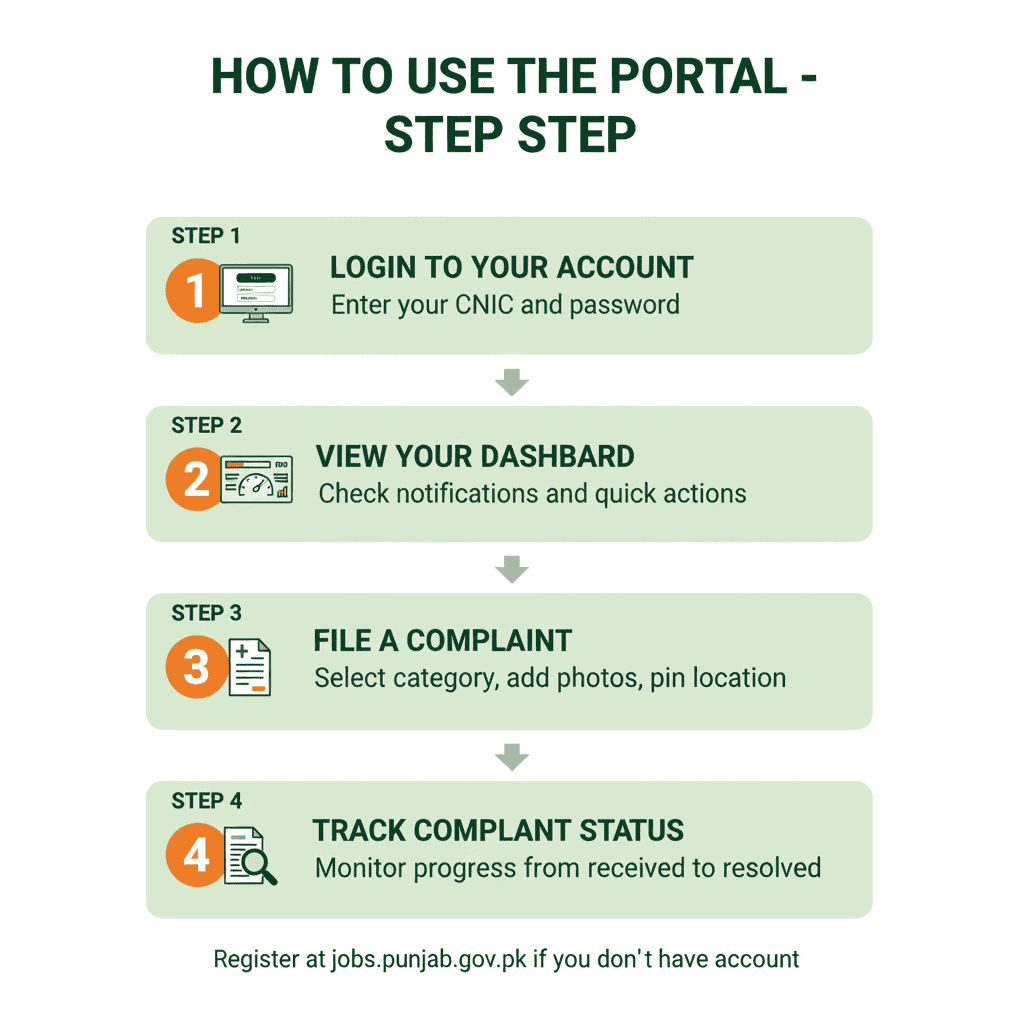
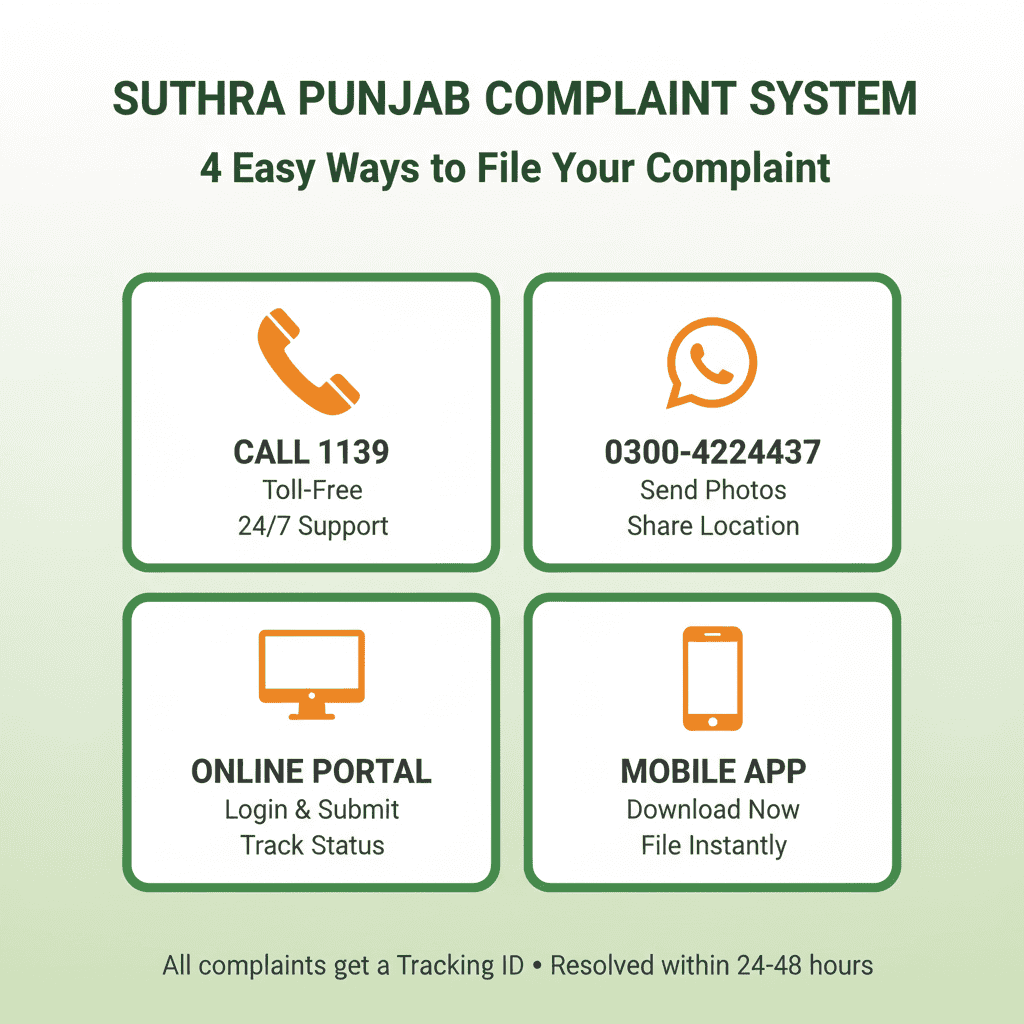
For the common citizen, engagement has never been easier. If you spot uncollected garbage or a sanitation issue, you don't need to visit an office. You can simply file a Suthra Punjab online complaint through their dedicated portal. Alternatively, use the Suthra Punjab complaint WhatsApp number to send photos and your location directly to the control room. The system is designed for speed, with most complaints resolved within 2 to 3 hours.
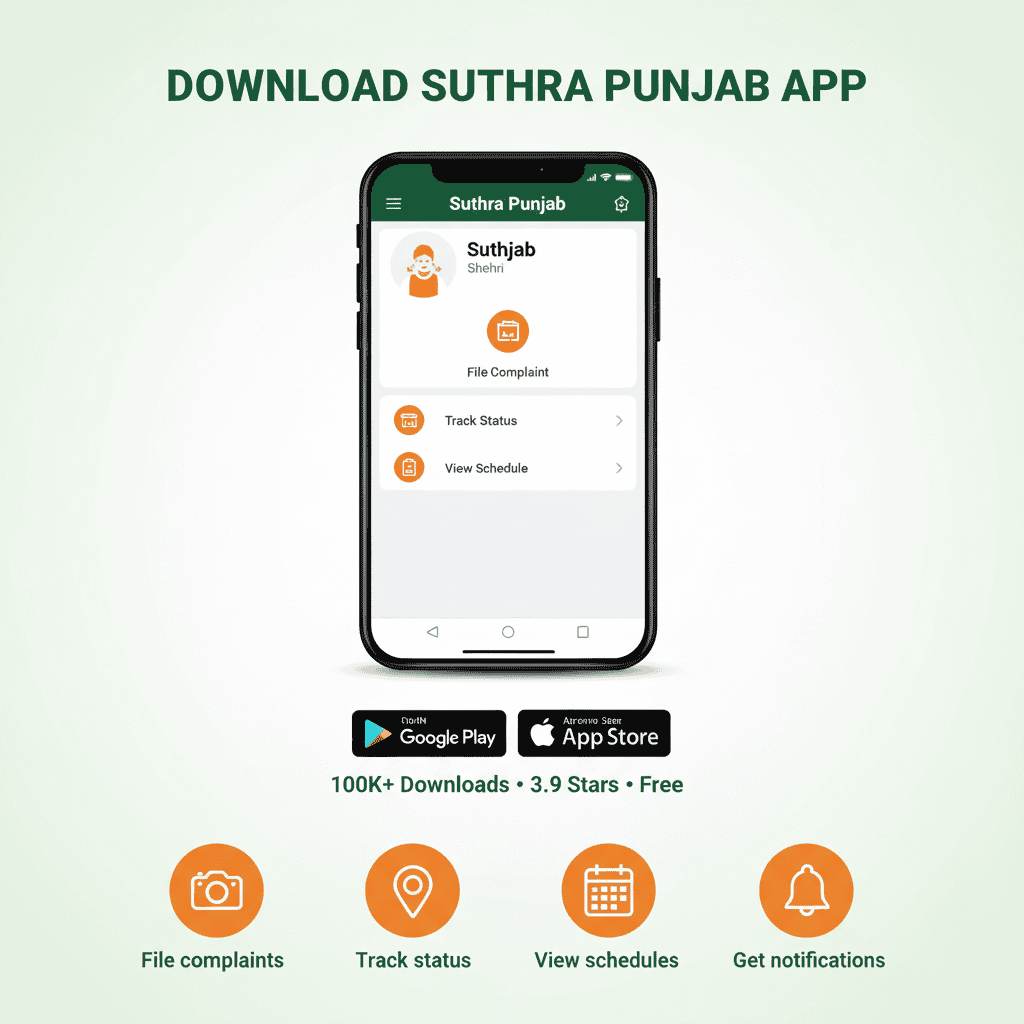
For those who prefer calling, the Suthra Punjab helpline (1139) is available 24/7 to assist residents in every district, from Gujranwala to D.G. Khan. Additionally, the Suthra Punjab app allows users to track the status of their complaints, find collection schedules, and stay updated on local cleanliness drives.
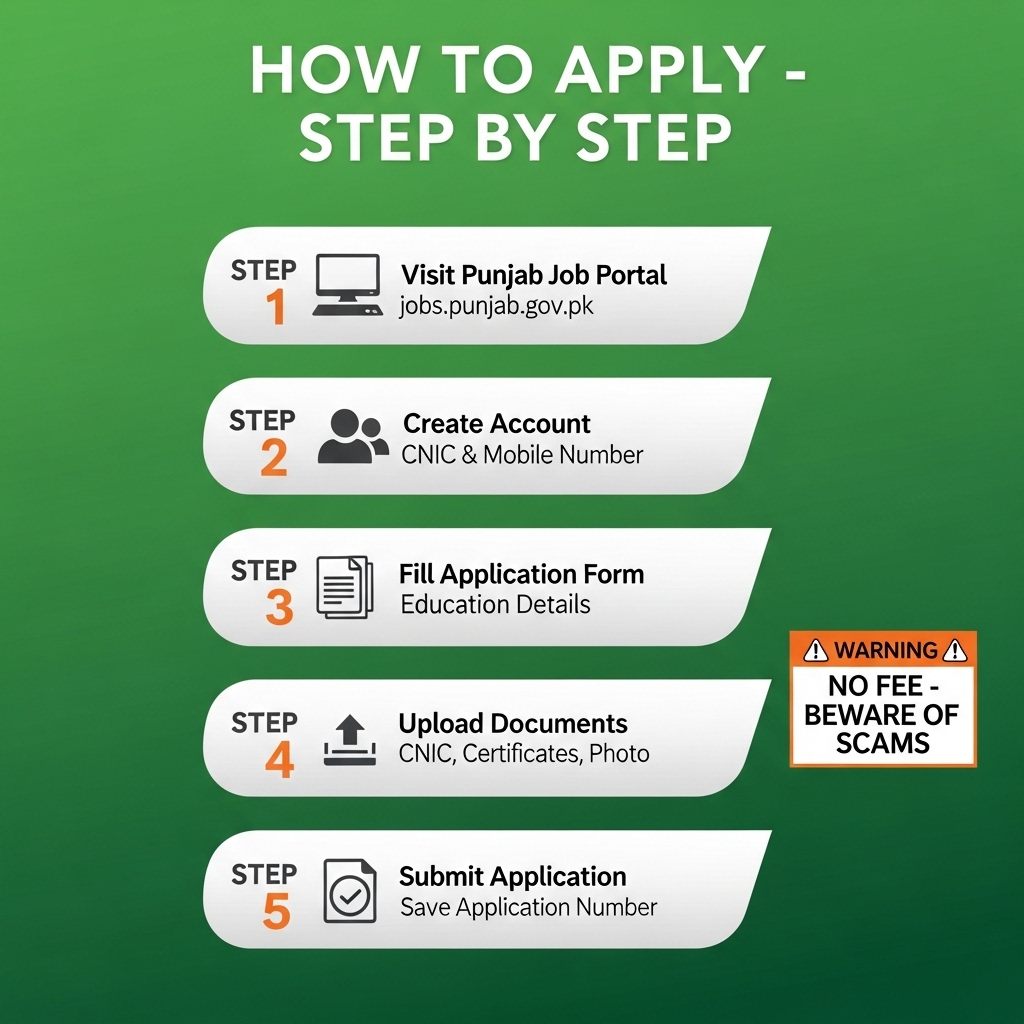
Accessing these services requires a simple Suthra Punjab online registration. Citizens can create an account on the official portal using their CNIC and mobile number. Once registered, the Suthra Punjab login gives you access to a personal dashboard where you can view complaint history and track resolution status. The Suthra Punjab program login works similarly for contractors and staff, offering a seamless interface for managing interactions with the authority.
Employment & Economic Impact
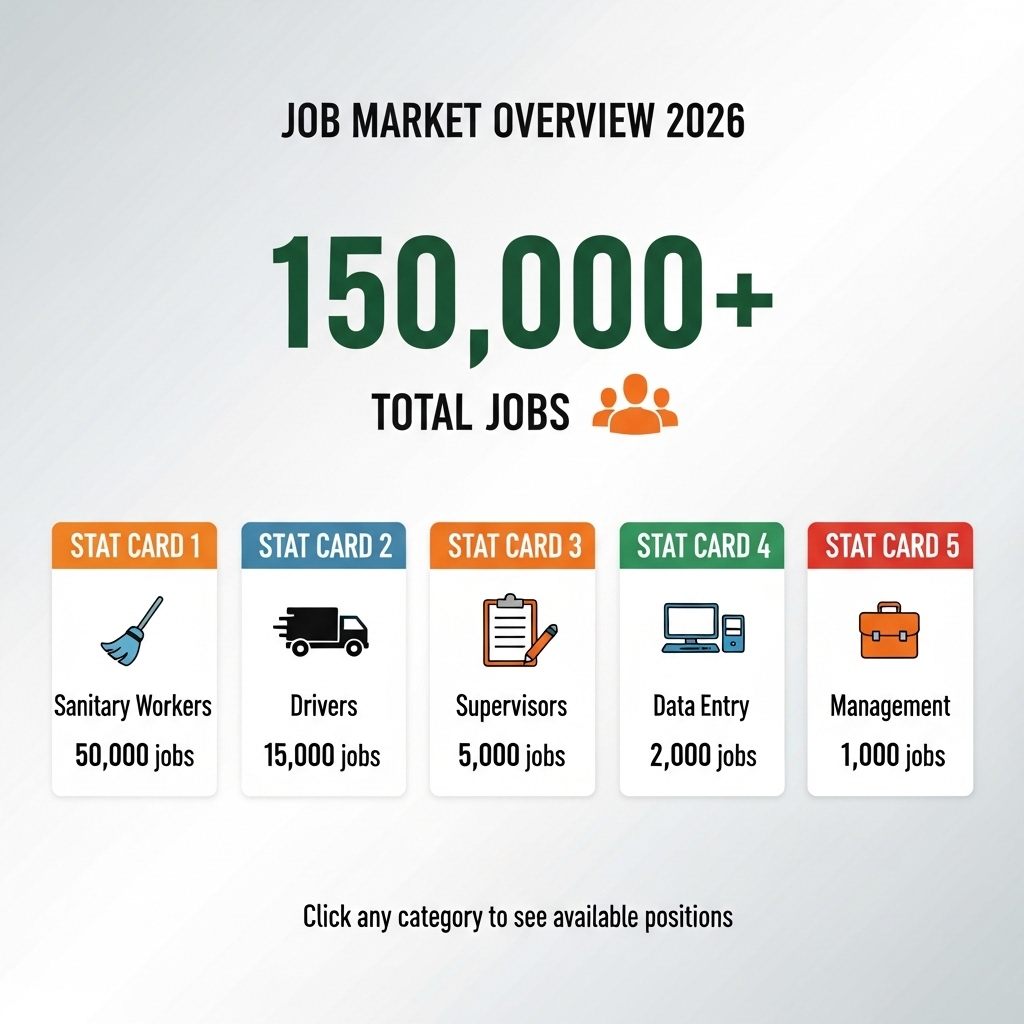
One of the most impactful aspects of this initiative is job creation. The Suthra Punjab program jobs have opened doors for thousands of families across the province. From sanitation workers and drivers to supervisors and data analysts, there are opportunities for people with various skill levels.
Many citizens are curious about the Suthra Punjab salary structure. The government has ensured competitive wages, with sanitation workers earning a respectable income, while technical and managerial roles offer even better packages. The Suthra Punjab program salary is paid regularly through digital channels, ensuring transparency and eliminating middlemen.
If you are looking for employment, the Suthra Punjab jobs 2026 cycle is currently active. Applications can be submitted via the Suthra Punjab program online registration page. Whether you are applying for Suthra Punjab program registration as a vendor or a job seeker, the process is fully digitized to prevent corruption.
A Day in the Life
Mohammad Aslam starts his day at 6 a.m. in a suburb of Faisalabad. After checking in with a quick facial scan on a tablet mounted on his rickshaw, he follows a route that the AI system optimized the night before. His vehicle is one of thousands equipped with a GPS device that reports its position every thirty seconds.
"Before this system, sometimes we would go down the same street twice because the supervisor wasn't sure if we'd covered it," Aslam explains. "Now the dashboard shows exactly which bins have been emptied. If I miss a spot, the control room calls me directly." His wages are deposited into his bank account every month without delay, a change he appreciates after years of uncertain cash payments.
Stories like Aslam's are becoming common across Punjab. The combination of technology and fair treatment has given sanitation workers a sense of dignity that was often missing. They now carry identity cards, wear proper uniforms, and are addressed by name when citizens call the helpline with appreciation or complaints.
Beyond Cleaning: A Sustainable Future
The vision of Suthra Punjab extends beyond just picking up trash. It is about turning waste into wealth. Massive projects are underway to convert landfill sites into solar parks and urban forests. The infamous Lakhodair dump, once a source of toxic methane, is being transformed into a renewable energy hub. Biogas plants and waste-to-energy facilities are being built to generate electricity and fertilizer, creating a circular economy.
Engineers estimate that within three years, the energy captured from waste could power thousands of homes in Lahore. Composting facilities are already selling organic fertilizer to farmers at subsidized rates, reducing the need for chemical alternatives. International delegations from Bangladesh, Kenya, and even the United Kingdom have visited Punjab to study the model, hoping to adapt it for their own cities.
This holistic approach has earned international praise from Forbes, Bloomberg, and even the UK government, proving that Punjab is leading the way in environmental innovation.
Explore Suthra Punjab Resources
Everything you need to know about the program—from filing complaints to finding jobs—all in one place.
A Shared Responsibility
No government program succeeds without the cooperation of its citizens. The teams behind Suthra Punjab often say that their job is only half the battle — the other half depends on residents who put waste in the right place at the right time, who report problems instead of ignoring them, and who treat sanitation workers with the respect they deserve.
In neighborhoods where citizens have organized themselves to monitor collection times and share tips, the improvement has been dramatic. Some communities have started small composting projects, reducing the amount of waste that needs to be hauled away. Others use the Shehri app to rate their collectors, giving honest feedback that helps authorities identify which contractors are performing well and which need to improve.
The journey from a province choked by waste to a global model of cleanliness is far from complete. But every complaint filed, every job created, and every street cleaned brings Punjab closer to the future its people deserve.